Four proposed policy measures could reshape Ghana’s food environment, but consultations with industry are still underway.
Ghana is developing a new set of policy measures that could change how certain food and beverage products are advertised, labelled, priced and provided in public institutions.
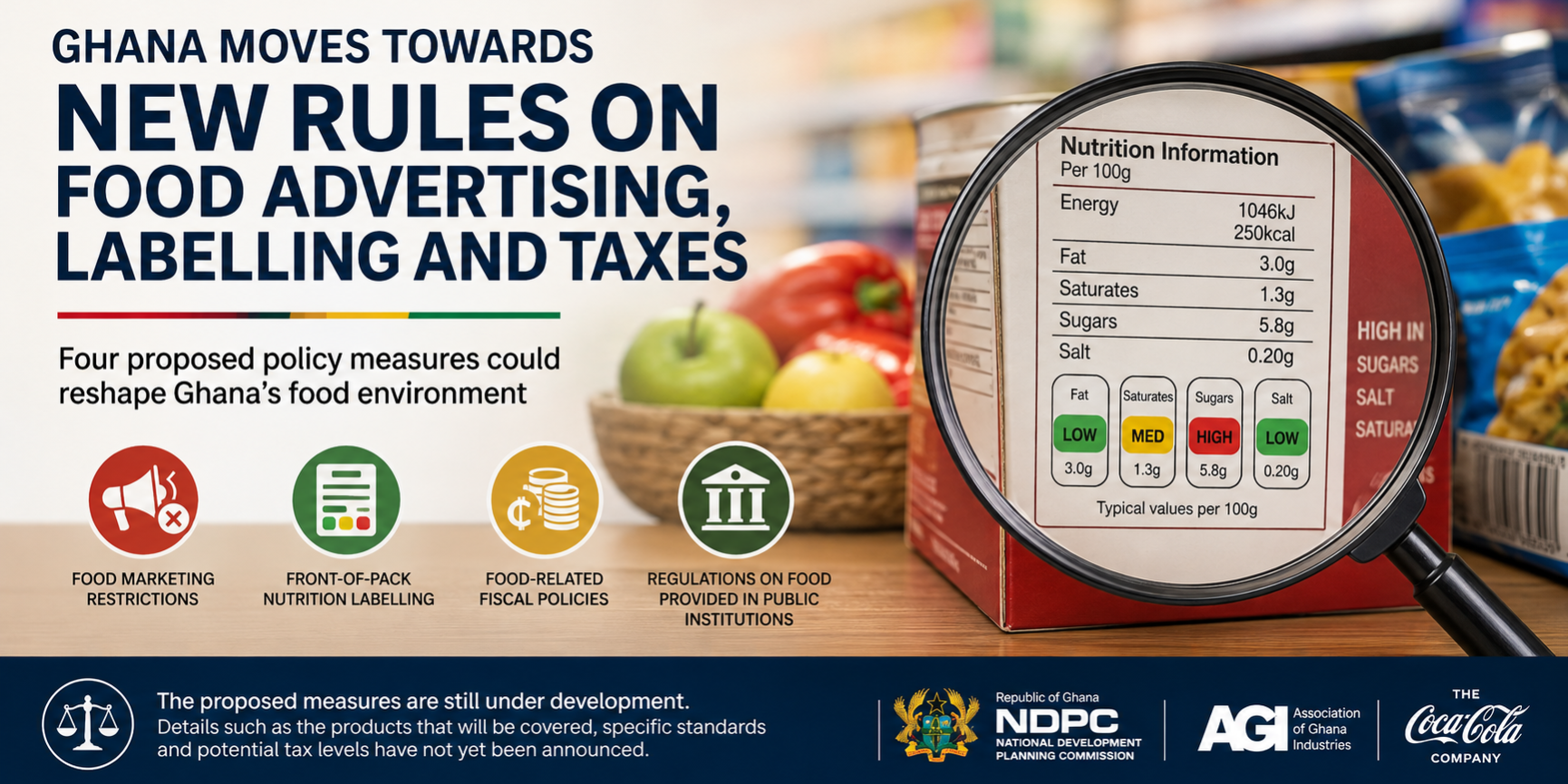
The proposed interventions—food marketing restrictions, front-of-pack nutrition labelling, food-related fiscal policies and public food provisioning regulations—were highlighted during a meeting between the National Development Planning Commission (NDPC), the Association of Ghana Industries (AGI) and The Coca-Cola Company on September 1, 2026.

credit: MoH,NDPC Ghana
The discussions point to an important shift in Ghana’s approach to nutrition. Rather than focusing only on what individuals choose to eat, the proposed measures seek to address the wider food environment—the conditions that shape what foods people see, buy, can afford and consume.
Four policy measures under development
According to the NDPC, four complementary interventions are currently being developed to improve Ghana’s food and nutrition environment.
1. Food marketing restrictions
Food advertising can play a powerful role in shaping consumer preferences, particularly among children and young people. The proposed restrictions could introduce new rules governing how certain food and beverage products are marketed.
The details of the proposed restrictions, including which products and advertising channels may be covered, have not yet been announced.
2. Front-of-pack nutrition labelling
The second proposed measure would introduce a front-of-pack nutrition labelling system.
Unlike the detailed nutrition information usually found on the back of packaged foods, front-of-pack labels are designed to provide consumers with clearer information at the point of purchase.
The NDPC said the proposed policies are being informed by evidence from a nutrition profiling system developed by the Food and Drugs Authority and its partners. Such a system could help determine how foods are classified for the purposes of labelling, marketing restrictions and other nutrition-related regulations.
3. Food-related fiscal policies
The third intervention involves food-related fiscal policy, which could include the use of taxes or other economic measures to influence the food environment.
Food taxes have increasingly been used internationally as a public health policy tool, particularly in relation to products associated with diets high in sugar, salt or unhealthy fats. However, Ghana has not yet announced the specific products, tax levels or mechanisms that may be included under the proposed policy.
The potential economic impact of these measures was one of the issues raised during discussions with industry.
4. Public food provisioning
The fourth proposed intervention concerns food provided in public institutions.
This could potentially affect the standards and guidelines governing foods served or made available in settings such as schools, hospitals and other public institutions. The objective would be to ensure that public food provision supports healthier diets and broader nutrition goals.
Why is Ghana considering these measures?
The proposals come as Ghana continues to face what policymakers describe as the triple burden of malnutrition.
According to figures presented during the engagement, 17.4 percent of children were stunted and six percent experienced wasting in 2022. Anaemia affected approximately 49 percent of children under five and 41 percent of women of reproductive age.
At the same time, Ghana is experiencing rising levels of overweight and obesity.
These overlapping challenges mean that Ghana’s nutrition problem is no longer simply about whether people have enough food. It is also increasingly about the quality of diets and the environments in which food choices are made.
The NDPC linked changing dietary patterns to urbanisation, changing incomes, inflation, climate pressures and increased exposure to highly processed foods.
This is why the proposed interventions extend beyond traditional nutrition programmes. They could influence multiple points in the food system—from how products are marketed and packaged to how they are priced and what foods are provided in public institutions.
Industry consultation will be critical
The September 1 meeting also highlighted the importance of engaging businesses that may be affected by the proposed regulations.
Representatives of industry raised concerns about the potential costs of compliance, particularly for imported products and changes involving packaging, labelling and branding.
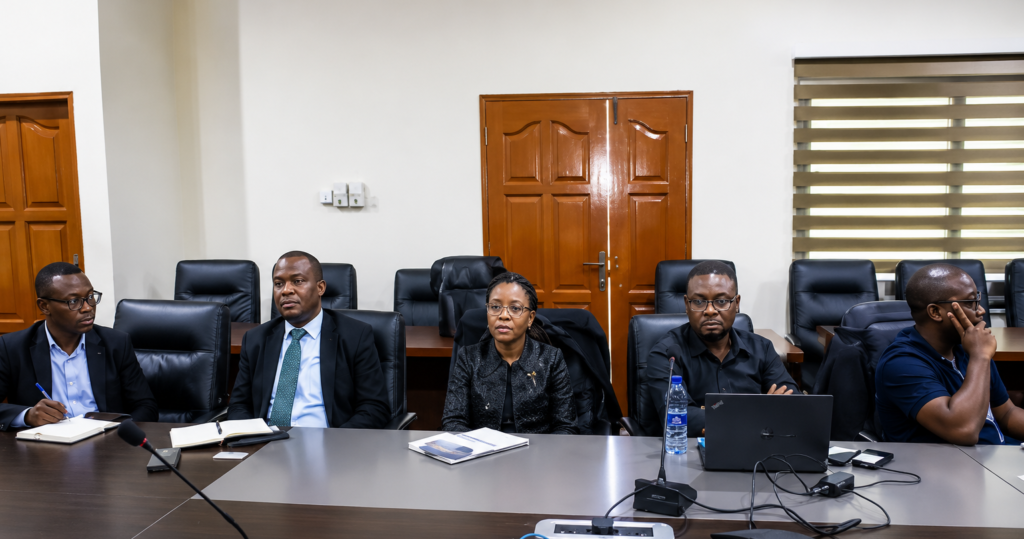
Image Credit: MoH, NDPC Ghana
The Coca-Cola Company’s Africa public policy representative, Mr Shiletsi Makhofane, welcomed the opportunity for continued engagement and stressed the need for businesses to have clarity on the standards and thresholds that may eventually be introduced.
The NDPC, however, emphasised that consultation and regulatory impact assessments would be an important part of the policy development process.
This means the four measures should not yet be viewed as final regulations. Important questions—including exactly which products will be covered, how foods will be classified, what standards will apply and when implementation could begin—are still to be determined.
A potentially significant moment for Ghana’s food policy
If implemented, the four interventions could represent one of Ghana’s most significant attempts to use public policy to shape the national food environment.
Together, food marketing restrictions, front-of-pack labelling, fiscal policies and public food provisioning could influence several of the factors that determine what Ghanaians eat: what products are promoted, what information consumers see, what foods cost and what is available in public settings.
The challenge now will be translating the broad policy direction into practical regulations that are evidence-based, clearly defined and capable of improving public health while taking account of implementation realities and the concerns of businesses and consumers.
For FANIS, the developments are particularly important because they signal a growing recognition that improving nutrition requires more than educating individuals about healthy eating. It also requires creating food environments in which healthier choices are easier to identify, access and afford.
As consultations continue, the specific design of these policies—and the nutrition profiling criteria that underpin them—will be key areas to watch.
This article is based on information from the National Development Planning Commission’s September 1, 2026 engagement with the Association of Ghana Industries and The Coca-Cola Company, as reported by GhanaWeb and the NDPC Public Relations Unit.