
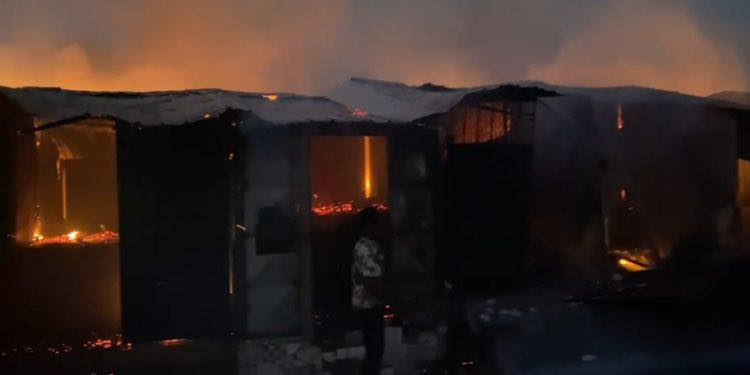
Over 100 stores destroyed as fire incident exposes vulnerabilities in local food supply systems
Kasoa, Ghana | January 5, 2026
A major fire outbreak at the Kasoa New Market on Sunday, January 4, 2026, has caused extensive destruction, leaving traders and residents in distress after more than 100 mini-stores were reduced to ashes following a five-hour firefighting operation. The fire, which reportedly began around 4:00 PM, triggered an emergency response from the Kasoa and Weija Fire Stations, with additional reinforcements deployed due to the intensity of the blaze.
According to the Ghana National Fire Service (GNFS), a total of eight fire tenders were mobilised to contain the fire—two from the Central Region Command and six high-capacity engines from the Greater Accra Region. The Greater Accra Regional Fire Commander, Assistant Chief Fire Officer (ACFO) II Rashid Kwame Nisawu, confirmed that the service received a distress call at approximately 4:50 PM.
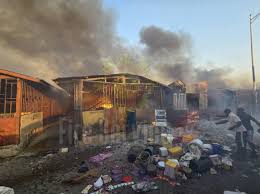
Firefighters worked tirelessly to prevent the inferno from spreading to nearby structures and residential areas. The fire has since been successfully extinguished, and no casualties were recorded. However, the damage to property is significant, with over 100 shops completely destroyed.
Many of the affected stores traded in food commodities, including edible oils, grains, processed foods, and other essential staples, alongside dry goods and hardware. While the exact cause of the fire remains unknown, GNFS investigators are currently on the ground to determine the source of the outbreak.
Emergency Response and Market Access Challenges
The scale of the fire necessitated a rare cross-regional mobilisation of emergency services, underscoring both the severity of the incident and ongoing challenges related to market safety. During a visit to the scene, the Member of Parliament for Awutu Senya East, Phyllis Naa Koryoo Okunor, observed that firefighting efforts were significantly hampered by poor access routes within the market.
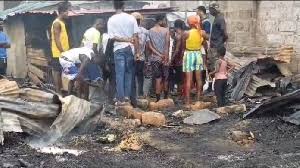
Reports from the ground indicate that fire engines struggled to manoeuvre through congested pathways created by unauthorised structures and containers, delaying response efforts and complicating containment operations.
Implications for Food and Nutrition
From a food and nutrition perspective, the Kasoa New Market fire has far-reaching implications. Markets such as Kasoa play a critical role in Ghana’s local food system, serving as key distribution points that link farmers, wholesalers, retailers, and consumers. The destruction of food stocks and trading infrastructure disrupts food supply chains and may lead to short-term shortages of essential food items, as well as price increases within the municipality and surrounding communities.
For many small-scale food vendors, the losses extend beyond physical assets to the erosion of livelihoods that support household food security. The loss of capital and stock—particularly perishable and semi-processed foods—may result in reduced incomes, compromised dietary diversity, and heightened vulnerability to food insecurity among affected households.
Food safety is also a major concern. Fires involving edible oils, grains, and packaged foods can contaminate surrounding environments with smoke residues and chemical by-products. Without proper oversight, salvaged food items may re-enter informal markets, posing potential public health risks. This highlights the need for clear guidance from local authorities on food disposal and post-disaster food safety assessments.
Market Safety and Food Systems Resilience
The Kasoa New Market fire has reignited broader discussions on market planning, structural integrity, and emergency preparedness. Congested market layouts, unauthorised extensions, and limited access routes not only hinder emergency response but also increase everyday risks for food system actors operating within these spaces.
Strengthening Ghana’s food and nutrition system requires markets that are designed and regulated with safety, accessibility, and public health in mind. Key measures include enforcing building and safety codes, maintaining designated fire lanes, promoting safe storage of combustible food items such as cooking oils, and strengthening trader education on fire prevention and risk management.
As investigations continue, FANIS will closely monitor developments and promote evidence-informed actions aimed at protecting lives, livelihoods, and the integrity of local food systems. The Kasoa New Market fire serves as a critical reminder that market safety is not only an infrastructure concern, but a fundamental food and nutrition security issue.