
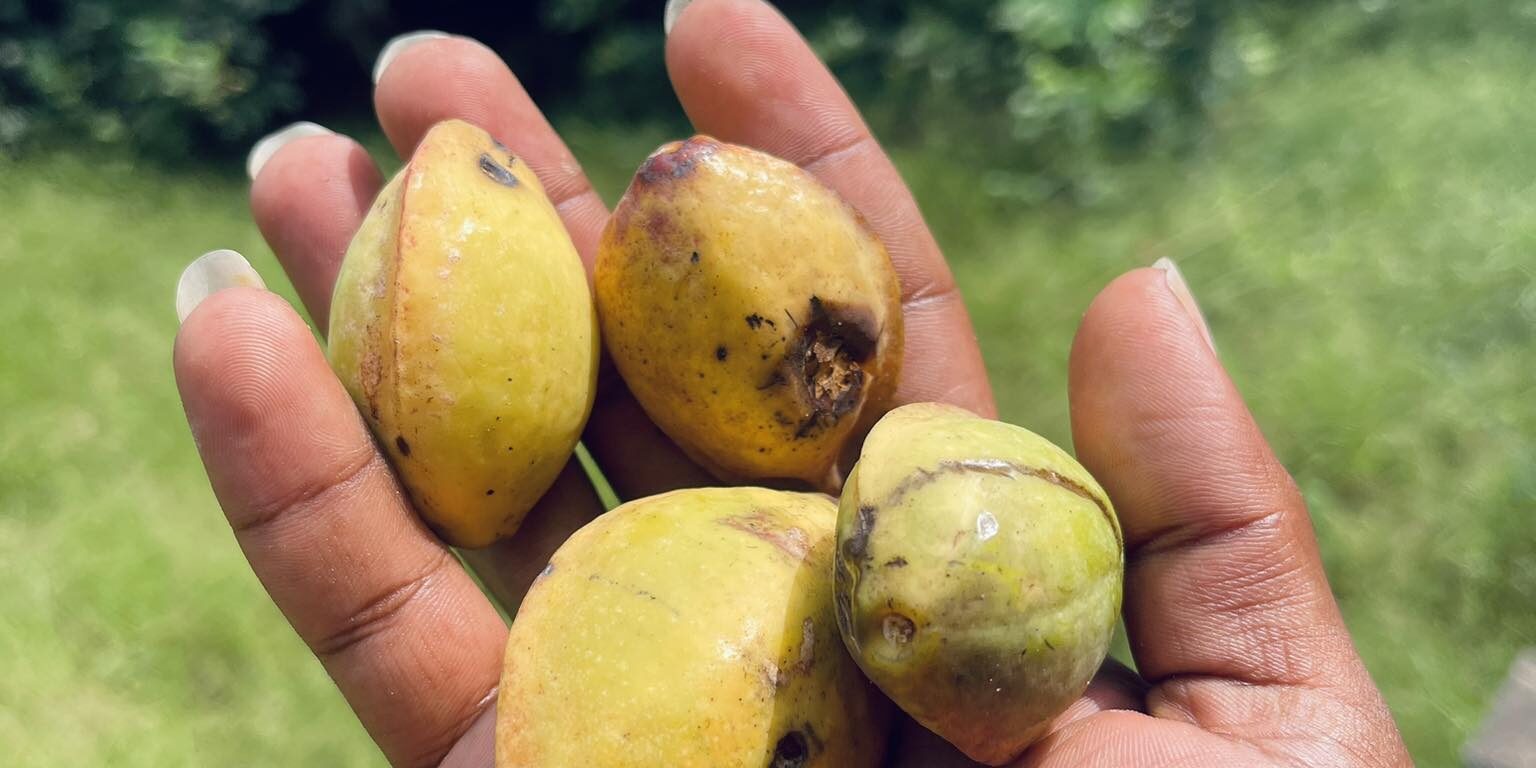
Abrofo Nkateɛ: Getting to Know the “Indian Almond” We Walk Past Every Day
If you grew up in Ghana, chances are you may have seen or even cracked open Abrofo nkateɛ at least once. You may have climbed the Abrofo nkateɛ tree and may have had some exciting childhood memories. Found in homes, school compounds, bushes, roadsides and along beaches, this familiar tree produces a nut many people enjoy casually; some of us cracked the nuts as children, others still snack on them today.
So, what exactly is Abrofo nkateɛ, and does it have any nutrition or health value worth paying attention to?
What is Abrofo Nkateɛ?
Abrofo nkateɛ is widely known internationally as the Indian almond or tropical almond, and scientifically as Terminalia catappa. Despite the name, it is not native to India alone. It grows widely across tropical regions, including Ghana, and thrives well in both coastal and inland areas.
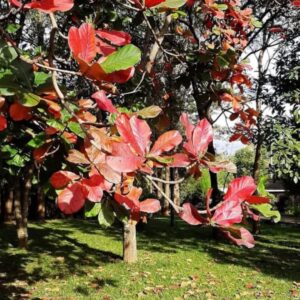
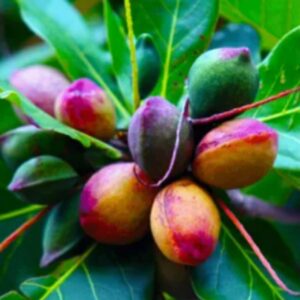
In Ghana, it is common for the tree, its fruit, and the nut or seed to all be referred to by the same local name, “abrofo nkate” or “abrofo nkateɛ.” Strictly speaking, however, the name best describes the nut (kernel) itself.
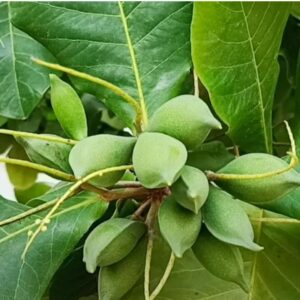
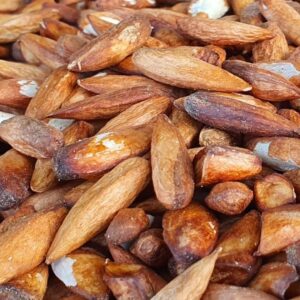
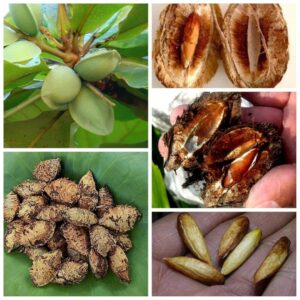
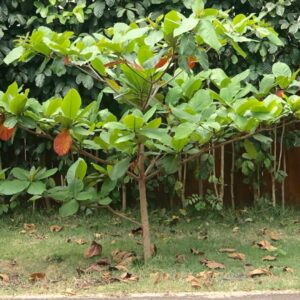
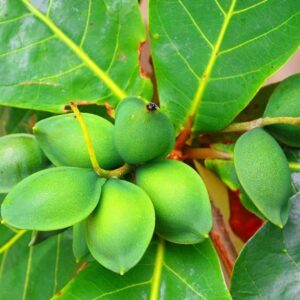
The Abrofo nkateɛ tree is a large tropical tree with broad leaves that often turn reddish or yellowish as they mature. When fully ripe, the fruit develops a soft, fleshy outer layer that encloses a very hard shell. Inside this hard shell is a small edible kernel (nkateɛ); the part most people roast or crack open to eat.
Although it resembles groundnuts in taste and use, it is botanically different and belongs to a separate plant family.
Nutritional Value: What’s Inside the Nut?
Scientific studies on Terminalia catappa show that the nut is nutrient-dense, similar to other popular tree nuts like almonds and cashews.
Research findings indicate that Abrofo nkateɛ contains:
-
- Healthy fats (45-60%), mainly unsaturated fatty acids
- Good-quality protein (20-30%), important for growth and tissue repair
- High energy content, useful for children, adolescents, and active adults
- Minerals such as magnesium, potassium, calcium, and phosphorus
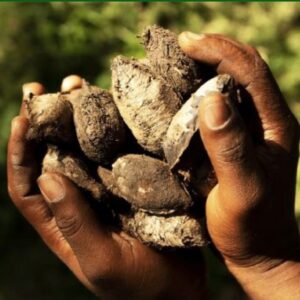
This makes Abrofo nkateɛ nutritionally closer to other tree nuts like almonds and cashews than to groundnuts. In addition, laboratory analyses show that fats alone can make up nearly half of the nut’s weight, explaining its rich taste and satiety.
Potential Health Benefits
Studies conducted in different parts of the world suggest that Abrofo nkateɛ may:
-
- Support heart health due to its healthy fat profile
- Provide antioxidants, which help protect the body from cell damage and oxidative stress linked to heart disease and other non-communicable conditions.
- Contribute to dietary diversity, especially in low-income or food-insecure settings
Other Uses of Abrofo Nkateɛ
Research and traditional knowledge show that Abrofo nkateɛ (Terminalia catappa) is a highly versatile tree with multiple uses. Scientific studies have found that the leaves contain bioactive compounds with antimicrobial, anti-inflammatory, and antioxidant properties, helping to explain their long-standing use in traditional medicine. The bark has also been studied for potential medicinal applications, particularly in managing infections. Environmentally, the tree is widely valued for shade, wind protection, and soil erosion control, especially in coastal areas, and its leaves are sometimes used in aquaculture to improve water quality.
In addition, the oil extracted from Abrofo nkateɛ kernels has attracted scientific interest. Research shows that the oil is rich in unsaturated fatty acids, notably oleic and linoleic acids, and has properties comparable to commonly used edible oils when properly processed. Beyond food use, the oil has demonstrated potential in cosmetic and small-scale industrial applications, such as soaps and skin-care products, due to its stability and moisturizing qualities. Together, these uses highlight Abrofo nkateɛ as more than just a snack; it is a multipurpose resource with nutritional, medicinal, environmental, and economic relevance.
How Do People Consume It in Ghana?
In Ghana, Abrofo nkateɛ is mostly:
-
- Eaten as a snack, often roasted
- Consumed occasionally, not deliberately included as a regular part of meals
- Gathered freely rather than cultivated
Unlike cashew or groundnut, it is underutilized and rarely included in nutrition programmes or food product development.
Is It Safe to Eat?
Generally, yes but should be handled properly.
-
- The shell is very hard, so care is needed when cracking
- Nuts should be clean, dry, and free from mould
- Like all nuts, it is energy-dense and best eaten in moderation
There is currently limited data on aflatoxin risk in kernels, highlighting an important research gap for food safety.
Why Should We Pay Attention to Abrofo Nkateɛ?
With rising food costs and concerns about nutrition insecurity in Ghana, Abrofo nkateɛ represents a local, affordable, and nutritious food resource that grows around us but receives little attention.
Promoting awareness and research around such foods can support:
-
- Dietary diversity
- Nutrition education
- More resilient local food systems
Food Safety and Consumption Considerations
While Abrofo nkateɛ is generally safe when properly handled:
-
- The hard shell must be carefully cracked to avoid injury
- Nuts should be clean and free from mould before eating
- Like other nuts, it should be eaten in moderation due to its high calorie content
People with nut allergies should also be cautious.
The Take-Home Message
Abrofo nkateɛ is not just a childhood snack. It is a nutritious local food with scientific backing. Sometimes, solutions to better diets are already part of our environment; we simply overlook them. As Ghana pushes toward healthier and more sustainable diets, rediscovering foods like the Indian almond may be part of the solution.
At FANIS, we believe that making such information accessible is key to evidence-informed food and nutrition decisions.
References (Selected)
-
- Akpakpan, A. E., & Akpabio, U. D. (2012). Evaluation of proximate composition and mineral elements of Terminalia catappa seed oil. International Journal of Modern Chemistry.
- Ezeokonkwo, M. A. et al. (2014). Nutritional and phytochemical composition of tropical almond (Terminalia catappa) seeds. Journal of Food Science and Nutrition.
- Kinoshita, S. et al. (2007). Antioxidant activity of flavonoids from Terminalia catappa. Food Chemistry.
- Olatidoye, O. P. et al. (2011). Chemical composition and physicochemical characteristics of tropical almond kernel oil. Journal of Agricultural Science.
- Ros, E. (2010). Health benefits of nut consumption. Nutrients.
- Tang, Y. et al. (2004). Pharmacological properties of Terminalia catappa. Journal of Ethnopharmacology.